Postbiotics or probiotics? Live isn’t the only option
Postbiotics are based on a different principle from probiotics: the microorganisms are deliberately inactivated. They don’t need to be kept alive during storage. Here is the difference worth knowing before you choose.1, 2
About a 3-minute read

Deliberately inactivated
To make postbiotics, microorganisms are grown before they are inactivated. The finished preparation can contain whole inactivated cells, their components and substances formed during growth.2, 3
Not alive doesn’t necessarily mean biologically inactive. What matters is the finished preparation: a documented health benefit is part of the scientific definition.2
Isolated substances from bacterial metabolism are not enough on their own to meet the definition. The preparation must also contain inactivated microorganisms or their components.3
A practical advantage of postbiotics
Live microorganisms have to be kept alive. When developing probiotic products, it is therefore important that enough of them survive throughout the shelf life.1, 2
With postbiotics, that need disappears. This can make production and storage simpler. It is a practical property that sets postbiotics apart.2
The advantage concerns how the microorganisms are handled. On its own, it is not proof of a better effect. Follow the storage advice for the product you choose.2, 3
| Term | Rule of thumb |
|---|---|
| Probiotics | LiveMicroorganisms given in adequate amounts. |
| Postbiotics | InactivatedMicroorganisms and/or their components. |
Common to both: a documented health benefit is part of the scientific definition.1, 2
Probiotics: live microorganisms
Probiotics are live microorganisms that provide a documented health benefit when given in adequate amounts. So it isn’t enough for a product to contain live bacteria. The evidence is part of the definition too.1
Probiotic products can contain different bacterial strains, and some contain specific yeasts. That is why results from one product can’t simply be transferred to another.5
Probiotics
Live microorganisms
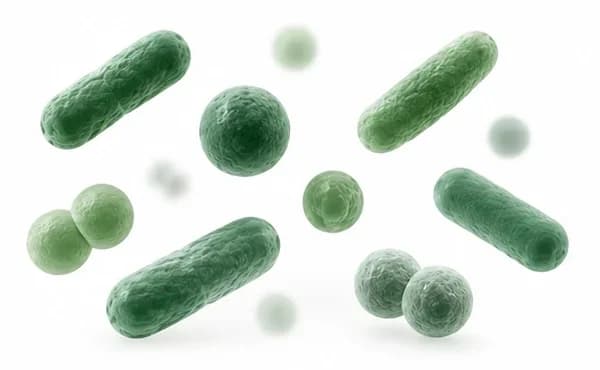
Must be alive when used
Postbiotics
Inactivated microorganisms
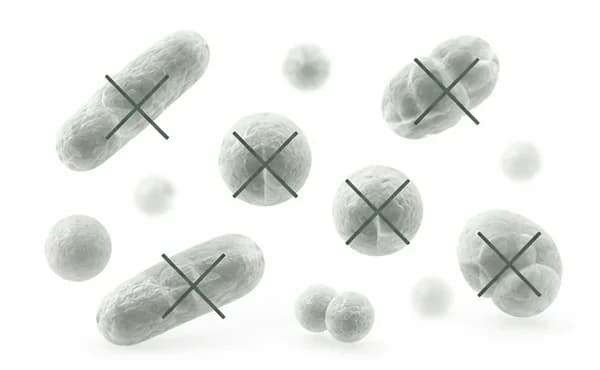
The microorganisms are inactivated
Do good bacteria have to “settle” in the gut?
Not necessarily. Many studied probiotic microorganisms only stay in the gut temporarily. They can still be active as they pass through.4
Permanent colonisation is therefore not a requirement for a probiotic effect. That is worth bearing in mind when comparing live and inactivated microorganisms.4
Get to know Biotics
The postbiotic ingredient GIVE™ in Biotics was developed in collaboration with Midtvedt Innovation AS, based on more than 60 years of Professor Tore Midtvedt’s research into microorganisms.6, 7
On 27 September 2018, Professor Tore Midtvedt was appointed Knight First Class of the Order of St. Olav for his services to medical microbiology.8
Biotics contains fermented protein hydrolysate, bitter fennel extract and peppermint oil.
That is a concrete starting point for assessing the product. Read the ingredient list and the recommended use, and tell general research on postbiotics apart from studies of the formulation you choose.3
Curious about Biotics?
You don’t need to know every technical term to get to know a product. Start with what it contains and remember the key difference: postbiotics don’t need to be kept alive.2
Want to try Biotics? Go to the order section below.
Sources and further reading
The numbers in the text refer to the sources below. External links open in a new tab.
- Hill C. et al. (2014). The International Scientific Association for Probiotics and Prebiotics consensus statement on the scope and appropriate use of the term probiotic.
Nature Reviews Gastroenterology & Hepatology, 11, 506-514.https://doi.org/10.1038/nrgastro.2014.66 - Salminen S. et al. (2021). The International Scientific Association of Probiotics and Prebiotics (ISAPP) consensus statement on the definition and scope of postbiotics.
Nature Reviews Gastroenterology & Hepatology, 18, 649-667.https://doi.org/10.1038/s41575-021-00440-6 - Vinderola G., Sanders M.E., Cunningham M. and Hill C. (2024). Frequently asked questions about the ISAPP postbiotic definition.
Frontiers in Microbiology, 14, 1324565.https://doi.org/10.3389/fmicb.2023.1324565 - ISAPP. Is probiotic colonization essential?
Scientific explanation of temporary presence and probiotic effect.https://isappscience.org/is-probiotic-colonization-essential/ - National Center for Complementary and Integrative Health, NIH. Probiotics: Usefulness and Safety.
Public resource on evidence, use and safety.https://www.nccih.nih.gov/health/probiotics-usefulness-and-safety - Postbiotika.no. GIVE™ and the collaboration with Midtvedt Innovation AS.
Product background and development collaboration.https://postbiotika.no/ - Melby K.K., Lingaas E., Hovig B., Rollag H. and Degré M. (2026). Tore Midtvedt.
Obituary in Tidsskrift for Den norske legeforening. Historical source.https://doi.org/10.4045/tidsskr.26.0039 - Det norske kongehus (2018). Tildelinger: Tore Midtvedt, 27. september 2018.
Order of St. Olav, Knight First Class. The honour recognises his services to medical microbiology.https://www.kongehuset.no/monarkiet/ordener-og-medaljer/tildelinger?decorations%5Bquery%5D=tore%20midtvedt